
How Earth’s Cooling Interior Shaped Our Breathable Atmosphere
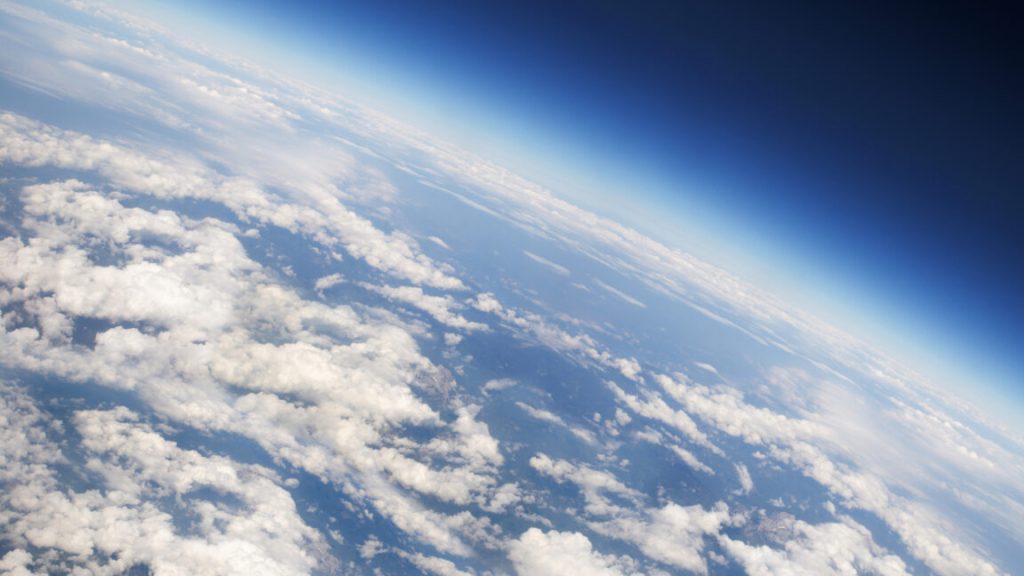
Our planet’s oxygen-rich atmosphere represents one of Earth’s most remarkable achievements, though it took billions of years to develop into the life-sustaining environment we know today. What I find particularly fascinating is how this atmospheric transformation wasn’t just about biology—it was fundamentally tied to the planet’s internal cooling processes and the evolution of plate tectonics.
Recent research from Wei Shi at Chengdu University of Technology presents a compelling argument that changes in how tectonic plates sink into Earth’s interior directly influenced atmospheric oxygen levels. This perspective matters because it challenges us to think beyond simple biological explanations for one of the most crucial developments in Earth’s history.
The Cooling Planet Connection
The key insight here revolves around temperature changes in Earth’s mantle over geological time. As our planet gradually cooled, the way tectonic plates subducted—or sank into the interior—fundamentally changed. I think this connection is brilliant because it links two seemingly separate processes: planetary cooling and atmospheric chemistry.
In Earth’s hotter early days, carbon and sulfur compounds couldn’t travel far into the deep interior with subducting plates. Instead, these oxygen-hungry elements would quickly return to the surface through volcanic activity, effectively scavenging atmospheric oxygen. This creates what I see as a self-limiting system that kept oxygen levels low for billions of years.
The game-changer came when cooler mantle conditions allowed subducting plates to carry carbon and sulfur much deeper into Earth’s interior. This process essentially removed oxygen’s competitors from the atmospheric equation, allowing oxygen concentrations to rise dramatically.
Three Crucial Oxygen Jumps
What strikes me as particularly elegant about this theory is how it explains the stepwise nature of atmospheric oxygenation. Rather than a gradual increase, Earth experienced three distinct oxygen surges that align remarkably well with periods of cooler subduction.
The Great Oxygenation Event, occurring between 2.4 and 2.0 billion years ago, marked the first major atmospheric transformation. This coincided with the assembly and breakup of an early supercontinent called Columbia. The researchers suggest that erosion from this landmass provided crucial nutrients to support massive populations of oxygen-producing cyanobacteria.
Following this came what geologists aptly term the “Boring Billion”—a period when tectonic activity slowed dramatically. I find this particularly interesting because it demonstrates how planetary processes can essentially stall, creating long periods of relative stability.
The final two oxygen increases, occurring between 800-500 million years ago and 450-250 million years ago, brought atmospheric oxygen to modern levels. These correspond with the formation and breakup of later supercontinents and the establishment of subduction zones similar to today’s “Ring of Fire” around the Pacific Ocean.
Who Benefits From This Understanding
This research is particularly valuable for planetary scientists and astrobiologists searching for potentially habitable worlds. Understanding the deep connections between planetary cooling, tectonics, and atmospheric chemistry provides crucial insights for identifying which exoplanets might develop oxygen-rich atmospheres.
Climate researchers will also find this perspective essential, as it demonstrates how geological processes operating over millions of years can fundamentally alter atmospheric composition. However, I should note that this work is less immediately relevant for those focused on short-term climate change, as these processes operate on geological timescales.
The implications extend to our understanding of Earth system science more broadly. This research reinforces my belief that atmospheric evolution cannot be understood in isolation—it requires considering the planet as an integrated system where surface, interior, and atmospheric processes are intimately connected.
The Bigger Picture
What I find most compelling about this work is how it reframes our understanding of what makes a planet habitable. It’s not enough to have the right distance from a star or the presence of water—the internal thermal evolution of a planet plays a crucial role in determining whether it can maintain a life-supporting atmosphere.
The research team’s chemical modeling successfully reproduced the observed timeline of oxygenation, lending credibility to their hypothesis. However, I think it’s important to recognize that atmospheric oxygenation resulted from multiple interacting processes, not just subduction efficiency.
This study reminds us that Earth’s habitability emerged from a complex interplay of geological and biological processes operating over vast timescales. For those interested in planetary science or astrobiology, this work provides a sobering reminder of just how many factors must align to create and maintain a breathable atmosphere like ours.